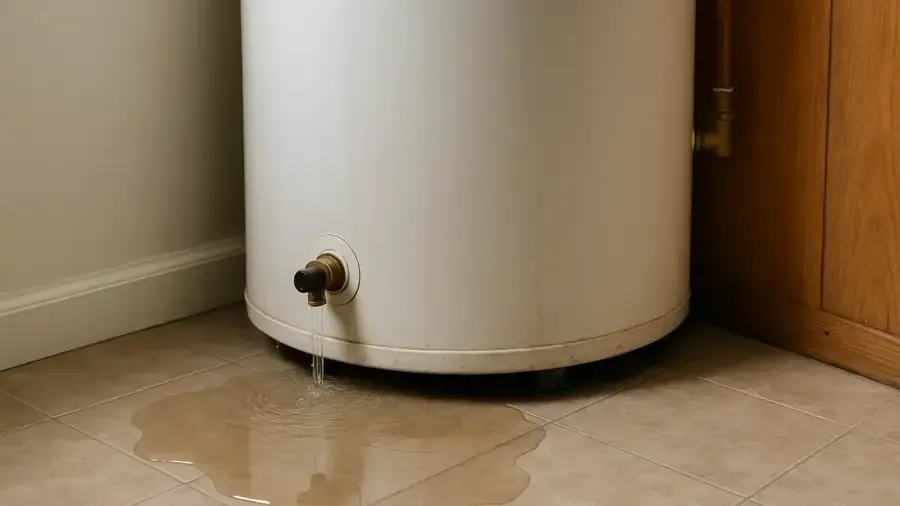
A water heater tank holds enough water to flood a utility room quickly, and in Folcroft replacing the tank also involves the borough. The wet floor and the paperwork both need attention, and they are two separate jobs.
Key takeaways
- The borough requires a building permit for water heater replacement and may also require plumbing, electrical or mechanical permits.
- The borough's permit list is for reference only and is not final, so the borough office is the place to confirm what a specific job needs.
- Residential permits have a 15 business day window and commercial permits 30, and jobs needing several permits may take longer.
- Work done without a required permit draws a stop work order, and permit fees are doubled once the correct permit is obtained.
- Cleaning up the water is a separate track from the replacement, and wet floors and walls need attention while the permit moves.
What a failing tank does to a room
A tank leak often starts as a weep at a seam, a fitting or the base. When the steel or a weld gives way, the water runs out fast.
It spreads across the floor, wicks into drywall and baseboards, and reaches stored boxes and carpet. In a finished basement it can also move into a wall cavity.
Location sets the damage. A tank tucked into a closet pushes water into the wall behind it, while one in an open basement sends it across the slab toward the lowest point.
- Cardboard boxes and papers on the floor wick water upward.
- Carpet and pad hold water against the subfloor.
- Drywall draws water above the wet floor and stays damp for days.
Why the tank is replaced, not patched
A tank that leaks from the vessel itself cannot be sealed in a lasting way, and one that has started to leak is usually near the end of its life. The usual fix is to shut off the supply and the power or fuel, drain the tank and install a new one.
Closing the cold water valve above the tank stops new water from coming in, but it does nothing about what is already on the floor.
A relief valve that drips, rust streaks near the base and a puddle that returns after it is wiped up are early signs. Catching them while the leak is small turns a flood into a nuisance.
- Turn off the cold water supply valve at the tank.
- Switch off the breaker for an electric heater, or set a gas heater control to off.
- Do not step into standing water near the breaker panel.
- Photograph the tank, the floor and anything the water reached.
The permit the borough lists for a replacement
Folcroft requires a building permit for water heater replacement and may also require plumbing, electrical or mechanical permits. The borough describes its permit list as reference only and not final, so it is worth asking the borough office about the exact job before the old tank comes out.
- A building permit for the replacement itself.
- Possibly a plumbing, electrical or mechanical permit as well.
- A 15 business day window for residential permits and 30 for commercial permits, longer when several permits are needed.
- A stop work order for work done without a required permit, and doubled permit fees once the correct permit is obtained.
- Electrical inspections that must be completed by a third party.
Working around the permit window
A 15 business day window is long next to a flooded utility room, and the household still needs hot water. The order of operations matters.
The permit, the plumber and the cleanup are three separate tracks. Cleanup of the water does not wait on the permit question, and the borough office can say whether any step beyond the tank swap needs its own approval.
- Ask the installer who pulls the permit and when.
- Ask whether plumbing, electrical or mechanical permits are also needed.
- Allow for the third party electrical inspection when electrical work is part of the job.
- Keep the permit with the job records for the insurer.
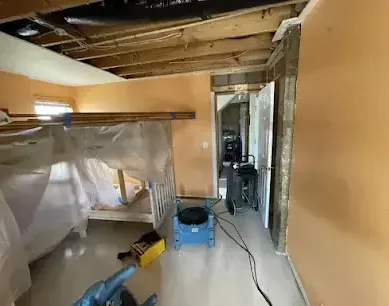
How the cleanup and the replacement fit together
The two jobs run side by side, but the order of the steps matters. A new tank should not go onto a floor that is still wet.
- Shut off the water and power or fuel, and photograph the scene.
- Call for extraction so the standing water leaves first.
- Order the new tank and start the borough permit while the floor is dried.
- Remove wet materials that cannot be saved.
- Dry the framing and subfloor to a reading.
- Install the tank, and schedule any inspection the permit calls for.
Cleanup after the tank fails
The water heater leak cleanup crew starts by extracting the water, then removes wet materials that cannot be dried and sets drying equipment. Fast water extraction is the difference between a dried floor and a rebuilt one.
Water from a supply tank is normally clean when it spills, so more materials can often be saved than after a sewage or flood loss. That advantage fades the longer the water sits.
A fresh leak from a heated tank can be hot enough to scald, so the household should stay clear of the puddle until it cools.
- Walls behind and beside the tank are metered.
- Subfloor and framing under the tank are checked.
- Stored items on the floor are sorted into dry, wet and discard.
- Nearby outlets and the panel are checked before power is restored.
Reducing the damage from the next tank
No one can stop a tank from aging, but a few habits make a leak cheaper when it comes. The restoration after a water heater failure is faster when the household knew where the valve was and caught the leak early.
These habits apply in every Folcroft home, whatever the age of the tank.
- Look at the tank for rust, drips or a damp base.
- Know where the cold water supply valve is.
- Check the discharge from the relief valve for dripping.
- Put a water alarm on the floor beside the tank.
- Keep stored boxes on shelves, not on the floor, near the tank.
Questions
Does Folcroft require a permit to replace a water heater?
The borough lists a building permit for water heater replacement and says plumbing, electrical or mechanical permits may also be required. It calls its list a reference that is not final, so confirm the exact job with the borough office.
How long does the permit take?
The borough gives residential permits a 15 business day window and commercial permits 30, and a job that needs several permits may take longer.
What happens if the work is done without a permit?
The borough issues a stop work order, and permit fees are doubled once the correct permit is obtained.
Can a leaking water heater be repaired?
A tank that leaks from the vessel itself is replaced, not repaired. A leak from a fitting, valve or pipe connection may be fixable by a plumber, which is why the source is found first.
How fast should the water be removed?
As soon as possible. Standing water soaks into drywall, baseboards and subfloor, and the longer it sits, the more material has to come out.
Should I buy a new tank before the cleanup is done?
The two can run side by side. The replacement can be ordered and the permit started while the floor is extracted and dried, though the new tank should not go onto a floor that is still wet.