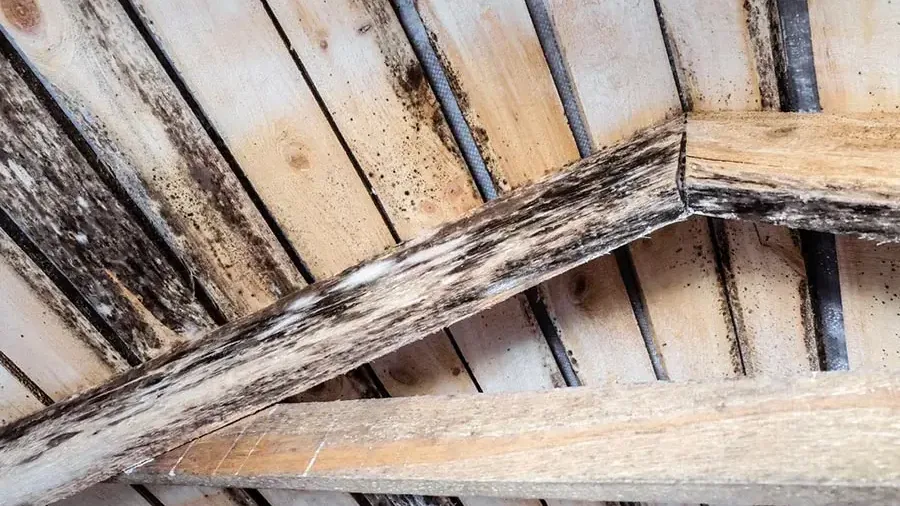
Much of Swarthmore's housing dates from the Victorian period through the 1920s, which means roofs, attics and ceilings with many years of weather behind them. When water gets through, it rarely stays where it entered.
Key takeaways
- A roof leak usually shows up far from where the water entered, so the source is traced from the roofline down through attic, ceiling and walls before drying starts.
- The borough requires a roofing permit, while ordinary repairs such as repainting, pointing, or replacing doors and windows within existing openings do not need a building permit.
- January averages 33.1 degrees Fahrenheit, close to the freezing mark, so winter days can swing above and below it and set up ice dams at the roof edge.
- Contractors doing residential work in the borough must provide proof of Pennsylvania Attorney General registration and required insurance, so ask for both before work starts.
- Saturated attic insulation and ceiling material are removed, and the framing is dried to a reading before anything is closed up.
How a roof leak travels through an older house
Water that gets past flashing, shingles or a failed seam lands on the roof deck, then follows the lumber downhill. It can run along a rafter a long way before it drips onto insulation.
Older roofs have more joints to fail, and older houses across Swarthmore have had more years for them to wear. Valleys, chimney flashing, plumbing vents and the junction where a porch roof meets a wall are common entry points.
From the attic floor the water spreads across the ceiling below, often reaching a light fixture, a closet or a wall corner. That is why a small stain in one room can mean a wide wet area overhead.
- The stain you see is usually downhill from the real entry point.
- Wet attic insulation holds water like a sponge and keeps feeding the ceiling below.
- Plaster ceilings can sag before they show a visible stain.
- A stain that grows after rain or a thaw points to the roof, not a pipe.
The borough roofing permit
All construction in Swarthmore is regulated under the Pennsylvania Uniform Construction Code, and a borough roofing permit is required. A new roof, or replacing a worn section, is not a project to start without checking with the borough office.
The permit also helps a homeowner. It puts the work on record, and the insurer or a later buyer may ask to see it.
- Ask the borough office what the roofing permit covers before work begins.
- Ask the contractor who pulls the permit and who schedules any inspection.
- Keep the permit with the project records.
Ordinary repairs the borough lists as exempt
The borough says a building permit is not required for ordinary repairs such as repainting, pointing, or replacing doors and windows within existing openings. Those items are named separately from roofing, which keeps its own permit.
After a leak, the distinction shows up in the repair list. Repainting a stained ceiling is ordinary work, while stripping and replacing roof sections is roofing work.
Ice dams and a January average of 33.1 degrees
Swarthmore has a humid subtropical climate, with average monthly temperatures running from 33.1 degrees Fahrenheit in January to 78.0 degrees in July. A January average that close to the freezing mark means winter days can swing above and below it.
When heat from the house melts snow on the roof and the meltwater refreezes at the cold edge, it can pool behind the ice and work its way under shingles. That is how an ice dam produces a leak in the middle of winter.
- Water stains that appear along exterior walls after a thaw.
- Icicles that grow thick along the roof edge.
- Damp insulation near the eaves.
- Drips inside after a day of sun on snow.
Autumn checks that head off winter leaks
Fall is the cheapest time to look at a roof, before leaves, rain and frost combine. A walk around the house with binoculars finds most obvious problems.
The checks cost little, and they catch the weak spots that an ice dam would otherwise find first.
- Clear gutters and downspouts so meltwater has a way off the roof.
- Look for lifted or missing shingles and cracked flashing.
- Check the attic on a dry day for daylight, stains or damp insulation.
- Seal gaps where warm air leaks into the attic, since heat loss drives ice dams.
- Trim branches that drop leaves and limbs on the roof.
What the drying looks like
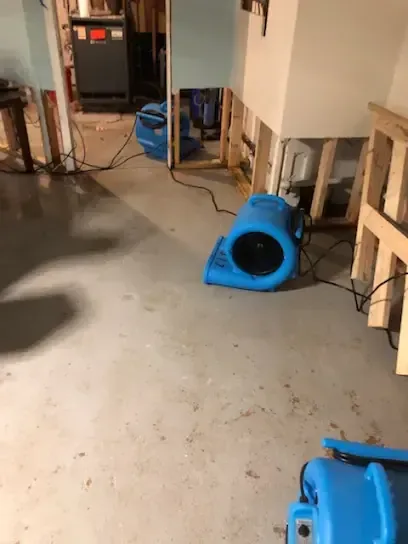
Once the source is stopped, roof leak water damage work begins in the attic. Wet insulation is removed, rafters and decking are metered and dried, and any saturated ceiling material below is cut out.
A ceiling leak in a plaster ceiling is handled with care, because sagging plaster can fall without warning. The drying team supports or removes it before drying the joist bays above.
If the ceiling below has already sagged, it is opened where it holds water. That lets the water out and prevents a sudden collapse onto the room.
- Photograph the stain, the attic and the roof damage before cleanup.
- Remove wet insulation and saturated ceiling material.
- Dry the framing and decking with air movers and dehumidifiers.
- Check the readings daily until they match a dry reference.
Checking a contractor before work starts
Contractors doing residential work in the borough must provide proof of Pennsylvania Attorney General registration and required insurance. Ask for both before any roof work is signed.
The local roof leak and ice dam crew keeps its own readings and photos for the insurer, but the roofing contractor and the permit are separate matters that the homeowner arranges.
- Ask for proof of Pennsylvania Attorney General registration.
- Ask for proof of the required insurance.
- Ask who pulls the roofing permit.
- Get the scope and the price in writing before work starts.
Questions
Does Swarthmore require a permit to fix a roof leak?
A borough roofing permit is required for roofing work, while ordinary repairs such as repainting or pointing are listed as not needing a building permit. For a specific repair, the borough office is the place to confirm.
How do I know if a ceiling stain comes from the roof or a pipe?
A stain that grows after rain or a thaw points to the roof. A stain that grows with no rain, near a bath or a kitchen above, points to a supply or drain pipe. A crew traces the source with a moisture meter.
Can wet attic insulation be dried in place?
Usually it is removed, because wet insulation holds water against the wood and takes a long time to dry. The rafters and decking are dried once it is out.
What is an ice dam?
An ice dam is a ridge of ice at the roof edge that traps meltwater behind it. The trapped water can work under shingles and leak into the attic and ceiling below.
How long does ceiling drying take?
A ceiling cavity usually needs about 3 to 5 days of drying after the source is stopped and the wet material is out. Readings, not the calendar, decide when the equipment leaves.
Will insurance cover a roof leak?
Coverage depends on the cause and the policy. Sudden damage is treated differently from wear over time, so photos, dates and moisture readings all help the claim.