When a sewer backs up into a home, the first question is who to call. The borough has a clear answer, and it also says plainly who generally pays for the cleanup.
Key takeaways
- For a sanitary sewer backup at a property, the borough says to call a plumber first.
- If the plumber thinks the problem is in a main borough sewer pipe, the next call is to the borough office, open Monday through Thursday. At other times the borough says to call 911 and a Public Works employee will be sent to investigate.
- The borough says it maintains its sewer system but that backups into homes and businesses inevitably occur, and its responsibility generally ends when the main is cleared and the cause is addressed.
- Cleanup and damage to the premises, including plumbing fees, generally rest with the resident.
- Most homeowner's insurance policies have optional riders for sewer backups that provide coverage if purchased.
The call order the borough sets out
The order matters because each call answers a different question. The plumber finds out where the blockage is, and that tells the household whether the borough is involved at all.
The same order applies at any hour. Outside office hours the call to 911 takes the place of the call to the borough office, and a Public Works employee will be sent to investigate.
- Call a plumber first, to find the cause of the backup.
- If the plumber thinks the problem is in a main borough sewer pipe, call the borough office.
- The borough office is open Monday through Thursday.
- At all other times, call 911, and a Public Works employee will be sent to investigate.
What the borough covers and what it leaves to the owner
The borough Public Works Department oversees the construction and maintenance of its infrastructure, including its sewer system.
The borough's role is the main sewer. The water that already came into the house is a separate matter, and a restoration crew can start on it while the plumber and the borough sort out the cause.
Where the borough's responsibility ends
The borough says it maintains the sewer system but that periodic backups into homes or businesses inevitably occur. In most cases its responsibility ends when the main is cleared and the cause of the blockage is addressed.
What generally rests with the resident
The borough says responsibility for cleanup and damage to the premises, including plumbing fees, generally rests with the resident. That puts the cost of the water, the drying and any rebuilding on the household unless insurance covers it.
Warning signs and first steps for the household
Most backups give a few warnings first. Recognizing them helps a household stop adding water before the floor is wet.
Early warning signs
These signs usually show up in the lowest fixtures first.
- A toilet that gurgles when the washer drains.
- Several drains that run slowly at once.
- A sewer odor near a basement drain or floor sink.
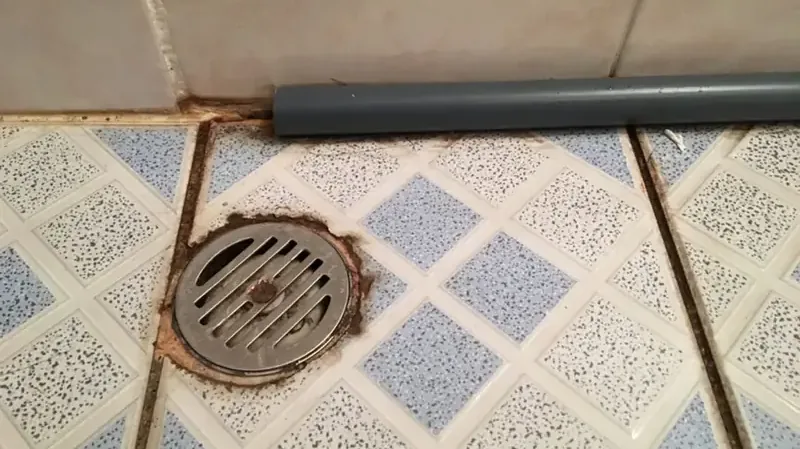
- Water coming up in a basement shower, tub or floor drain.
What to do while waiting
Once water is coming up, a few steps limit the damage and the health risk while the plumber is on the way. They cost nothing and they protect the claim.
- Stop using sinks, toilets, tubs, washers and dishwashers.
- Keep children, pets and anyone with a weak immune system out of the room.
- Do not run a household vacuum on the water.
- Photograph the water before anything is moved.
- Wear gloves and boots if anything must be moved to a dry place.
Why the insurance rider matters
The borough notes that most homeowner's insurance policies have optional riders for sewer backups that provide coverage if purchased. A policy without the rider may not respond at all.
The time to read the policy is before a loss, not after.
Some households learn about the rider only after a claim is turned down. A short call to the insurer or agent on a calm day can confirm whether a sewer backup is covered and up to what amount.
- Read the policy for a sewer or water backup endorsement.
- Ask whether the rider has its own limit, separate from the main policy limit.
- Ask whether it covers cleanup and contents or only repairs.
- Keep the policy documents where they can be found quickly.
What the cleanup itself involves
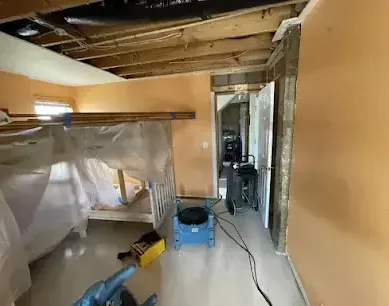
A sewer backup is Category 3 water, so the sewage backup cleanup crew works in protective gear and treats the whole wet area as contaminated. The goal is to remove the water, the materials it soaked and the bacteria it carried.
The local sewage backup cleanup services crew keeps the readings and photos the insurer will ask for.
Once the area is cleaned, structural drying brings the remaining materials to a dry reading. In a house from the Victorian period through the 1920s, that includes older framing and plaster, which are metered with extra care.
- Standing water is pumped and vacuumed out.
- Carpet, pad, low drywall and other porous materials are removed.
- Hard surfaces are scrubbed and disinfected.
- Air movers and dehumidifiers dry what remains.
- Readings are taken until each material reaches a dry reference.
Keeping records for a claim
The borough puts cleanup cost on the resident unless insurance responds, so records carry real weight. A short, organized file saves time with the insurer.
If the backup involved a main borough sewer pipe, a note of the date and time of the call to the borough office is worth keeping. What the borough finds and says can become part of the insurance story.
- Photographs of the water, the drain and every item it touched.
- The plumber's note on where the blockage was found.
- Any contact with the borough office, with the date.
- Receipts for plumbing, cleanup and temporary housing.
- The moisture readings from the drying team.
The plumbing permit note
A borough plumbing permit is required for all plumbing work except work that only replaces fixtures or the working parts of a faucet or valve, or clears stoppages. Clearing the blockage itself falls under the exception.
A repair that goes beyond clearing the blockage, such as replacing a section of pipe, falls under the permit rule. A plumber can say what a specific repair needs, and the Swarthmore borough office confirms it.
Questions
Who do I call first when a sewer backs up in Swarthmore?
The borough says to call a plumber first. If the plumber thinks the problem is in a main borough sewer pipe, call the borough office.
What if the backup happens at night or on a weekend?
The borough office is open Monday through Thursday. At all other times the borough says to call 911, and a Public Works employee will be sent to investigate.
Does the borough pay for the cleanup?
The borough says its responsibility generally ends when the main is cleared and the cause is addressed, and that responsibility for cleanup and damage, including plumbing fees, generally rests with the resident.
Is homeowners insurance enough?
The borough notes that most policies have optional sewer backup riders that cover a backup if purchased. A policy without the rider may not cover it, so read the policy.
Do I need a permit to clear a stoppage?
The borough lists clearing stoppages among the plumbing work that does not require a plumbing permit. Other plumbing work generally does.
What should the plumber's note say?
It should say where the blockage was found, what caused it and what was done to clear it. That note tells the borough and the insurer which part of the system was involved.