Structural Drying in Folcroft, PA
After the water is out, the framing, subfloor and walls still hold moisture; air movers and dehumidifiers pull it out while meter readings show when each area has returned to normal.
(888) 557-1733Start the drying equipment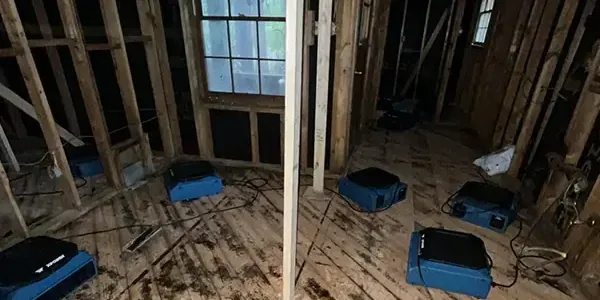
What every structural drying and dehumidification job includes
Dispatch around the clock
Active water is treated as urgent at any hour. The response team rolls with extraction units, air movers and LGR dehumidifiers already on the truck.
Readings before tear-out
Moisture mapping and thermal imaging show where the water traveled inside walls and under floors, so only wet material comes out.
Dried to IICRC S500
Equipment is sized to the class of loss and stays until materials read within 2 to 4 points of a dry reference.
A file an adjuster can read
Timestamped photos, daily psychrometric logs and a line-item scope go into the claim file while the work happens.
First steps for structural drying and dehumidification while help is on the way
Only what is safe, in this order:
- Map the moisture. Meters and imaging outline the wet zone.
- Place equipment. Air movers and dehumidifiers are sized to the room.
- Monitor daily. Readings direct moves, additions and removals.
- Confirm dry. Final readings match unaffected areas.
Dispatch runs every hour of the year, weekends and holidays included.
(888) 557-1733Start the drying equipmentWhat does structural drying and dehumidification cost in Folcroft, PA?
Drying cost follows the size of the wet area, the density of the materials and how many days equipment must run. Hardwood, plaster and Category 3 water all stretch the schedule, which is why the top card carries the widest range.
One room, clean water
- One-room equipment
- Daily readings
- Dry check
Finished basement or several rooms
- Several rooms dried
- Wall cavities treated
- Dehumidifier days
Dense materials or Category 3
- Dense materials dried
- Extended equipment days
- Close monitoring
Ranges are typical, not a quote: water category, square footage, material class and how fast drying started move the number most. The water damage cost calculator gives a closer range, and coverage depends on your own policy.
How structural drying and dehumidification is handled, step by step
Map
Wet zones are outlined with meters.
Place
Equipment is sized to the space.
Monitor
Readings steer each adjustment.
Release
Equipment leaves once readings match.
Pulling water out is only half of a loss. Wood, drywall and concrete keep holding moisture long after the puddles are gone, and structural drying is the controlled process that removes it so the building does not stay damp inside.
How drying equipment works
- Air movers push dry air across wet surfaces to evaporate moisture
- Dehumidifiers pull that moisture out of the air and collect it as water
- Cavity and subfloor systems force air into places that cannot be reached directly
- Meters track the readings so equipment is added, moved or removed as needed
Drying is a balance between air movement and humidity control, and adding fans without dehumidifiers only moves the damp around.
Different buildings dry differently
Folcroft began as farmland, became a residential suburb after the railroad was built through it in 1874 and was incorporated as a borough in 1922. No typical building age is assumed, so each structure's materials are checked on site, because plaster, hardwood and modern drywall all dry at different speeds.
Water gone but walls still damp? Describe it to the drying team and a monitoring plan follows.
(888) 557-1733Book a moisture surveyKnowing when it is done
Drying ends when wet materials match the readings of unaffected areas in the same building, not after a set number of days. Larger losses are covered in commercial water damage, and the structural drying overview explains the monitoring visits.
Structural drying and dehumidification across Folcroft and nearby towns
Structural drying runs wherever water reached framing and floors, whether the building stands near Darby Creek, around Montgomery Park, along Delmar Drive or close to Folcroft Station.
The same service nearby: structural drying and dehumidification in Havertown, Norwood, Glenolden.
Related water damage services
Structural Drying and Dehumidification questions, answered
Still dealing with it?
Water gone but walls still damp? Describe it to the drying team and a monitoring plan follows.
(888) 557-1733 Book a moisture surveyHow long does structural drying usually take?
Several days for most losses, though dense materials like hardwood and plaster take longer. Readings, not the calendar, decide when equipment comes out.
Why do fans and dehumidifiers run together?
Fans lift moisture off surfaces and the dehumidifier removes it from the air. Using only one leaves the room damp, so both are balanced for the room size.
Will the electric bill go up during drying?
Usually, yes. Equipment draws power for several days, and keeping a log helps when the insurer looks at the claim.
Can wet drywall be dried instead of removed?
Clean-water drywall that has not softened can sometimes be dried in place with cavity drying. Softened, stained or sewage-touched drywall is cut out.
Does mold form if drying is delayed?
It can, starting within 24 to 48 hours in damp organic material, which is why drying begins promptly.
What do the readings mean?
They compare wet areas with dry reference spots in the same building. Drying is finished when the two match, which prevents stopping too early.
Finish the job with a dry reading
Phone any hour to set up air movers and dehumidifiers, and the team explains how readings decide when the equipment can leave.
(888) 557-1733Set up the equipment