Water Extraction and Removal in Glenolden, PA
Homes in this Delaware County borough sit close together, so standing water is pumped and vacuumed out before it can wick into baseboards, subfloors and the rooms beside it.
(888) 557-1733Get a pump-out crew moving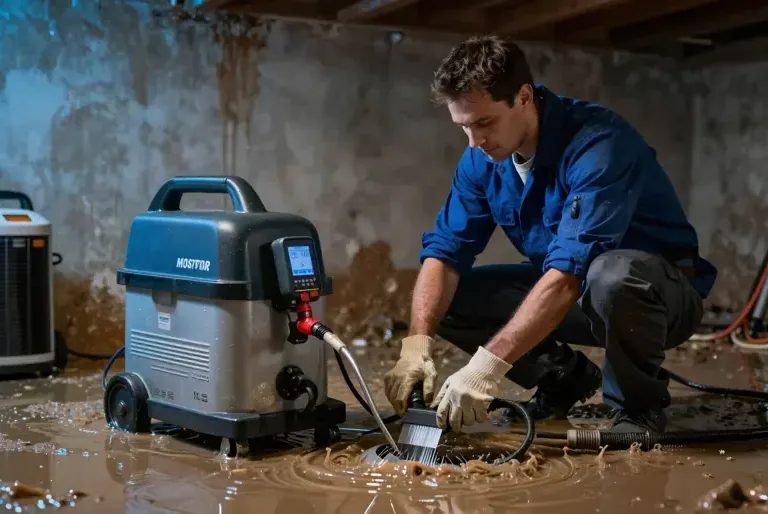
What every water extraction and removal job includes
Dispatch around the clock
Active water is treated as urgent at any hour. The response team rolls with extraction units, air movers and LGR dehumidifiers already on the truck.
Readings before tear-out
Moisture mapping and thermal imaging show where the water traveled inside walls and under floors, so only wet material comes out.
Dried to IICRC S500
Equipment is sized to the class of loss and stays until materials read within 2 to 4 points of a dry reference.
A file an adjuster can read
Timestamped photos, daily psychrometric logs and a line-item scope go into the claim file while the work happens.
First steps for water extraction and removal while help is on the way
Only what is safe, in this order:
- Make the area safe. Turn off power to wet rooms and keep pets away from standing water.
- Document the loss. Photograph the water line, damaged items and the source.
- Start extraction early. Standing water soaks into subfloors and framing within a day.
- Save what you can. Lift rugs and electronics onto dry surfaces.
Dispatch runs every hour of the year, weekends and holidays included.
(888) 557-1733Get a pump-out crew movingWhat does water extraction and removal cost in Glenolden, PA?
Pulling standing water usually costs $500 to $1,800 for a small clean-water spill, $1,800 to $4,500 when a pad is pulled from one or two rooms, and $4,500 to $9,000 for a basement level or gray water.
Small clean-water spill
- Wet vacuum pass
- Surface moisture check
- Spot drying
One or two rooms, pad pulled
- Padding removal
- Subfloor extraction
- Fans placed
Basement level or gray water
- Pump-out crew
- Contaminated material removal
- Sanitizing
Ranges are typical, not a quote: water category, square footage, material class and how fast drying started move the number most. The water damage cost calculator gives a closer range, and coverage depends on your own policy.
How water extraction and removal is handled, step by step
Locate
Find the source and the water depth
Extract
Pumps and wands clear standing water
Remove
Cut out soaked padding and trim
Verify
Meters confirm what moisture is left
Extraction is the first real step in any wet loss. The longer water sits, the deeper it travels into wood, drywall and carpet backing, so the restoration team pulls out the bulk of it before drying equipment is unpacked. In a borough with 7,223 residents, homes are close together, so one wet room is often a short step from the next.
What gets removed
- Standing water from floors, stairs and low corners
- Saturated padding that will not dry in place
- Wet baseboard and the lowest strip of drywall
- Silt and debris carried in with the water
Everything cut out is photographed first, so the adjuster has a clear record of what was lost.
How the water is classified
Clean supply water, gray water from appliances and contaminated water each call for a different response. The source is identified before the first pump starts, because Category 3 water means protective gear and removal rather than drying.
Water pooling on the floor right now? Talk it through with a crew.
(888) 557-1733Describe the water by phoneAfter the water is gone
Once surface water is out, moisture stays in the subfloor, wall cavities and under cabinets. Meters and a thermal camera locate it, and the team then sets air movers and dehumidifiers to match, and a note of every reading goes into the job file. That stage is covered under structural drying. Read more about water extraction across Havertown or return to the borough hub.
Water extraction and removal across Glenolden and nearby towns
Extraction work runs wherever water settles, from kitchens and living rooms to lower levels, on the streets off Chester Pike, near South Avenue and around Glenolden Park.
The same service nearby: water extraction and removal in Havertown, Norwood, Folcroft.
Related water damage services
Water Extraction and Removal questions, answered
Still dealing with it?
Water pooling on the floor right now? Talk it through with a crew.
(888) 557-1733 Describe the water by phoneWhy does standing water need to come out so fast?
Water wicks upward into drywall and across subfloors, and wet materials begin to degrade within a day. Pulling it early keeps the loss smaller and the drying period shorter.
Can a shop vacuum handle the job?
For a small spill, yes. Anything covering a room or reaching padding needs extractors, because a household vacuum cannot pull water out of carpet backing or the subfloor beneath.
Is the water safe to touch?
Not always. Clean supply water is low risk, but water from a drain, an appliance or outdoors can carry bacteria, so gloves and boots are the minimum until the source is known.
What happens to the wet carpet padding?
Padding soaks up water like a sponge and rarely dries in place, so it is usually cut out and discarded while the carpet itself is lifted and dried when possible.
Does extraction replace drying?
No. Extraction takes out the liquid, but moisture remains in framing and subfloor, which is why structural drying follows with meters and equipment.
Get the water out of the house before it reaches the walls
Tell the extraction crew how deep the water is and which rooms are wet, and the right pumps and wands can be lined up for the job.
(888) 557-1733Request pumps for the floor