Water Extraction in Sharon Hill, PA
Standing water in an older home soaks into subfloors, trim and framing faster than most owners expect. The extraction crew pulls it out first, then hands the room to the drying team.
(888) 557-1733Get the pump-out crew moving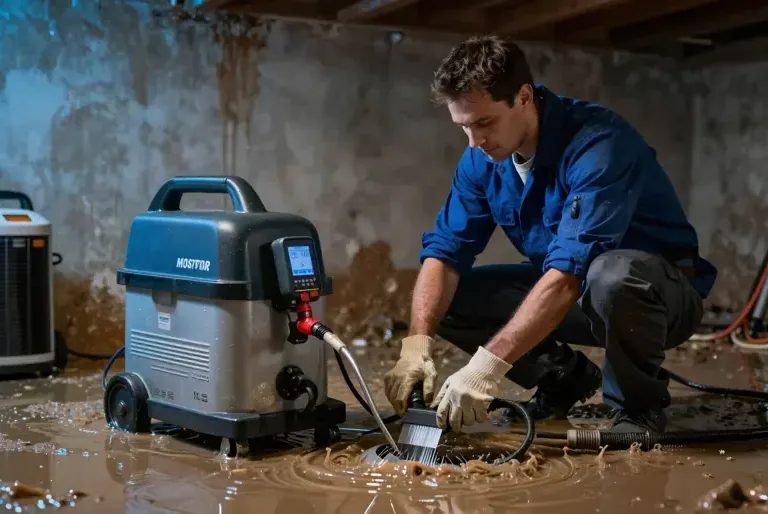
What every water extraction and removal job includes
Dispatch around the clock
Active water is treated as urgent at any hour. The response team rolls with extraction units, air movers and LGR dehumidifiers already on the truck.
Readings before tear-out
Moisture mapping and thermal imaging show where the water traveled inside walls and under floors, so only wet material comes out.
Dried to IICRC S500
Equipment is sized to the class of loss and stays until materials read within 2 to 4 points of a dry reference.
A file an adjuster can read
Timestamped photos, daily psychrometric logs and a line-item scope go into the claim file while the work happens.
First steps for water extraction and removal while help is on the way
Only what is safe, in this order:
- Stop the source. Close the shutoff so no new water arrives.
- Clear the floor. Extractors and wands remove standing water room by room.
- Check what soaked in. Meters and a thermal camera find water in walls and subfloors.
- Hand off to drying. Air movers and dehumidifiers take over as the water leaves.
Dispatch runs every hour of the year, weekends and holidays included.
(888) 557-1733Get the pump-out crew movingWhat does water extraction and removal cost in Sharon Hill, PA?
A small clean-water spill runs $500 to $1,800, one or two rooms with the pad pulled runs $1,800 to $4,500, and a basement level or gray water runs $4,500 to $9,000. The itemized scope sets the final figure.
Small clean-water spill
- Fresh spill pump-out
- Floor and baseboard check
- Fans if needed
One or two rooms, pad pulled
- Extraction room by room
- Carpet pad removal
- Drying equipment set
Basement level or gray water
- Heavy pump-out
- Sealed hoses
- Sanitizing wipe-down
Ranges are typical, not a quote: water category, square footage, material class and how fast drying started move the number most. The water damage cost calculator gives a closer range, and coverage depends on your own policy.
How water extraction and removal is handled, step by step
Stop the source
Close the shutoff or lift the pump.
Extract
Wands and extractors clear standing water.
Measure
Meters map every wet surface.
Dry
Air movers and dehumidifiers run.
The borough says most homes here are over 50 years old and many are 75 to 100 years old or more. Water in a house that age reaches older framing, subfloors and layered flooring quickly, so removal comes before every other step. Twins and row homes add a wrinkle, since water can cross a shared wall into the next house.
What the crew pulls out first
- Standing water on hard floors, pulled with wands and squeegee heads
- Water trapped in carpet and pad, lifted before it wicks upward
- Pooled water in low corners, closets and doorway thresholds
- Overflow from tubs, tanks and failed supply hoses
Gray and contaminated water get sealed hoses and protective gear, because those loads carry more than a clean-water spill does.
Why speed matters in older houses
Water travels along joists, behind baseboards and under flooring, and it keeps spreading after the visible puddle is gone. The longer it sits, the more material it soaks, and wet drywall and wood can start growing mold within 24 to 48 hours.
Standing water keeps spreading through floors and walls until it is pulled out.
(888) 557-1733Pull the standing water outAfter the water is out
Extraction does not finish the job. Moisture meters and a thermal camera show what is still wet inside walls and under floors, and the drying team then sizes air movers and dehumidifiers to match. The full process is laid out for water extraction in Havertown, and the next stage is structural drying.
Water extraction and removal across Sharon Hill and nearby towns
The extraction crew works across the borough, in row homes, twins and larger single homes, and at businesses in the Henderson Industrial Park on Calcon Hook Road.
The same service nearby: water extraction and removal in Havertown, Glenolden, Folcroft.
Related water damage services
Water Extraction and Removal questions, answered
Still dealing with it?
Standing water keeps spreading through floors and walls until it is pulled out.
(888) 557-1733 Pull the standing water outHow fast does standing water need to come out?
As soon as possible. Water starts soaking into flooring, drywall and framing right away, and the 24 to 48 hour window for mold growth opens once surfaces are wet.
Is it safe to walk through standing water?
Not always. Water near outlets or appliances can carry a shock risk, and sewage water carries germs, so the crew checks power and water type first.
How does extraction differ from drying?
Extraction removes the bulk water that can be pumped or vacuumed off. Drying then pulls out moisture left in walls, subfloors and furniture.
Does outside water change the job?
Yes. Water that entered from a storm or a backed-up drain is treated as contaminated, so it needs sealed hoses, protective gear and cleaning of every surface it touched.
Should extraction wait for the adjuster?
It should not. Photos and notes document the loss, and stopping further damage is part of what policies expect. Policy wording sets the details.
Water on the floor of an older home? Get the extraction started.
The restoration team removes the standing water, measures what soaked in and sets the drying plan, with an itemized scope ready for the insurance file.
(888) 557-1733Ring the extraction crew now