Structural Drying and Dehumidification in Sharon Hill, PA
Pulling out the standing water is only half the job. The drying team then removes the moisture held in framing, subfloors and finishes, and uses meter readings to show when each material is dry.
(888) 557-1733Set up the dry-out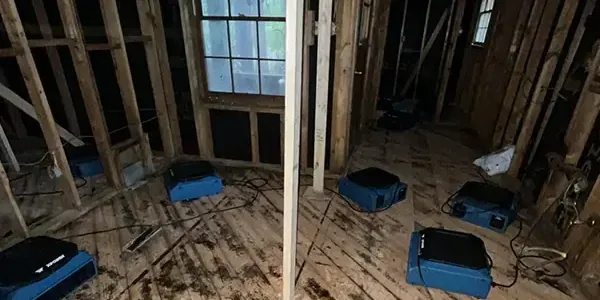
What every structural drying and dehumidification job includes
Dispatch around the clock
Active water is treated as urgent at any hour. The response team rolls with extraction units, air movers and LGR dehumidifiers already on the truck.
Readings before tear-out
Moisture mapping and thermal imaging show where the water traveled inside walls and under floors, so only wet material comes out.
Dried to IICRC S500
Equipment is sized to the class of loss and stays until materials read within 2 to 4 points of a dry reference.
A file an adjuster can read
Timestamped photos, daily psychrometric logs and a line-item scope go into the claim file while the work happens.
First steps for structural drying and dehumidification while help is on the way
Only what is safe, in this order:
- Read the building. Meters and a camera mark every wet material.
- Place the equipment. Air movers and dehumidifiers go where readings point.
- Check daily. Readings show what is drying and what lags.
- Confirm dry. Equipment comes out once targets are met.
Dispatch runs every hour of the year, weekends and holidays included.
(888) 557-1733Set up the dry-outWhat does structural drying and dehumidification cost in Sharon Hill, PA?
One room with clean water runs $1,000 to $3,500. A finished basement or several rooms run $3,500 to $9,000, and dense materials or Category 3 water run $9,000 to $25,000+. The itemized scope lists equipment and readings.
One room, clean water
- Air movers
- Dehumidifier
- Daily readings
Finished basement or several rooms
- Multi-room setup
- Cavity venting
- Moisture log
Dense materials or Category 3
- Extended drying
- Specialty dehumidifiers
- Final readings
Ranges are typical, not a quote: water category, square footage, material class and how fast drying started move the number most. The water damage cost calculator gives a closer range, and coverage depends on your own policy.
How structural drying and dehumidification is handled, step by step
Measure
Meters map every wet material.
Place
Equipment goes where readings point.
Monitor
Readings are checked each visit.
Finish
Equipment leaves once targets are met.
Because the borough says many homes here are 75 to 100 years old or more, drying often has to reach thick framing, layered floors and old finishes that hold moisture longer than new materials do. The goal is to move that moisture out before it spreads.
How the equipment is set
- Air movers aimed along walls and under cabinet bases
- Dehumidifiers sized to the volume of the wet space
- Small cuts or holes to ventilate closed cavities
- Daily readings that decide what stays and what goes
Equipment is repositioned as readings change, so the wettest areas get the most airflow. Closed doors keep humid air from drifting back in.
Why readings, not time
Drying stops when meters say framing and drywall reach their targets, not after a set number of days. Pulling equipment early leaves moisture inside walls, where it can stain, warp or support mold within 24 to 48 hours of staying wet.
Moisture left in framing keeps damaging a building after the visible water is gone.
(888) 557-1733Start the dry-down planFrom drying to repair
When the readings settle, the team documents the final values and removes the equipment. Rebuilding can begin because the framing is dry. The Havertown overview of structural drying and dehumidification covers the wider process, and water extraction here is the stage that comes first.
Structural drying and dehumidification across Sharon Hill and nearby towns
The drying team works in the borough's older row homes, twins and single houses, and in the stores and industrial buildings on its commercial side.
The same service nearby: structural drying and dehumidification in Havertown, Glenolden, Folcroft.
Related water damage services
Structural Drying and Dehumidification questions, answered
Still dealing with it?
Moisture left in framing keeps damaging a building after the visible water is gone.
(888) 557-1733 Start the dry-down planHow long does structural drying take?
It depends on the materials and how wet they got, and readings decide the finish line. Light jobs may dry in a few days, while dense wood and heavy water take longer.
Why do the machines run all day?
Air movers lift moisture off surfaces and dehumidifiers pull it out of the air, and that cycle continues until the materials settle at their dry targets.
Will the equipment raise noise or power use?
Yes, both rise while it runs. The equipment is sized to the wet area, and it comes out as soon as readings allow.
Can wet drywall be dried instead of replaced?
Often, if the water was clean and caught early. Drywall that has sagged, crumbled or been soaked by contaminated water is usually cut out.
What happens if drying is rushed?
Moisture stays inside framing, where it can warp wood, lift finishes and encourage mold growth. Meter readings, not the calendar, show when drying is done.
Wet framing and floors after a leak? Bring in the drying team.
The drying team measures every wet material, sets equipment to match and tracks readings until the building reaches its targets, then hands over an itemized scope.
(888) 557-1733Phone the dehumidifying crew